
In the world of industrial systems, catastrophic failures often have microscopic origins. A brand-new system fails a pressure test. A single, weeping leak costs a fortune in downtime. The root of these problems often starts long before a wrench ever touches the part-it begins in a crucible of molten steel.
The reliability of your components isn't found on a price list. It's forged during a fundamental process most people have never heard of: deoxidation. Understanding this one step is the key to avoiding costly system failure.
What is Steel Deoxidation? A Simple Explanation
When steel is made, oxygen is used to burn off impurities. The problem is, leftover oxygen gets trapped in the molten mix. If that steel cools with oxygen still in it, it forms microscopic gas bubbles (porosity) and creates non-metallic "junk" (inclusions).
That "junk" is poison to the final product. It creates weak spots and makes the steel brittle.
Deoxidation is the essential step of chemically cleaning that oxygen out before the steel is cast. Elements like silicon and aluminum are added to bind with the oxygen, allowing it to be removed. The result is a clean, dense, and strong material-the only kind you should trust in your systems.

During the deoxidation of molten steel, bright sparks flying as oxygen is removed from the metal during the process.
How Deoxidation Prevents Critical Failures on the Job Site
The real-world consequences of cutting corners on this process are severe. Here's how proper deoxidation directly impacts the industrial fittings you use every day.
Rock-Solid Pipe Fittings & Couplings
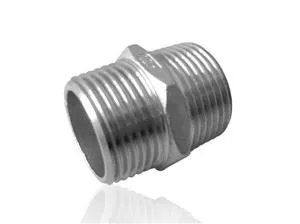
A system is only as strong as its connections. It's common to see pipe couplings and threaded pipe fittings that look perfect on the outside but are riddled with internal voids. Proper deoxidation ensures that every coupling, butt weld fitting, or union has a solid internal structure that can handle pressure without fail.

Deoxidation ensures couplings and half-couplings are strong, defect-free, and durable for reliable performance.
High-Integrity Valves for Total Flow Control
A valve's job is precision, but inclusions act like sandpaper on seals and seats. For a swing check valve or a check valve, they cause backflow. For a ball valve-whether it's a 2 piece or 3 piece ball valve-they prevent a tight shutoff and lead to failure, regardless of its 1000 WOG pressure rating. This integrity is just as crucial for a wafer valve or globe valve.

Deoxidation ensures ball valves are dense, durable, and resistant to leaks or defects, guaranteeing flow control.
Resilient Hose Clamps & Flanges
The gripping power of hose clamps is critical. A brittle clamp is a snapped clamp. When you rely on high pressure hose clamps to secure a line, you need ductile, deoxidized steel. The same goes for the structural integrity of the flanges that hold your system together.
Choosing a Partner, Not Just a Part
Anyone can sell you a fitting. The good ones-the experienced stainless steel fittings manufacturers and knowledgeable valve distributors-understand the importance of material science. They aren't just moving boxes; they're providing reliability.
When you talk to stainless steel pipe and fittings suppliers, ask them about material traceability. If they can't speak confidently about the quality of their raw steel, walk away.
FAQ on The Deoxidation of Stainless Steel Fittings
Q: What's the real difference between 304 and 316 stainless steel fittings?
A: Both must be properly deoxidized to perform. However, 316 stainless steel fittings contain molybdenum, giving them superior corrosion resistance against chlorides and chemicals. For marine or chemical applications, 316 is the only way to go. 304 stainless steel fittings are a great, cost-effective choice for most other applications.
Q: I see "1000 WOG" on a ball valve. What does that mean?
A: WOG stands for Water, Oil, Gas. It's a pressure rating indicating the valve can handle 1000 PSI at ambient temperatures. But that rating is meaningless if the steel itself is weak from poor manufacturing.
Q: Why are some fittings so much cheaper? Are they cutting corners on deoxidation?
A: Almost certainly. Lower prices often come from using inferior raw materials or skipping critical quality control steps. In this business, you absolutely get what you pay for.
Ready for discussing about your next projects ? Contact us now !
- Download our product catalogue to see the complete collection of valves and fittings.
- Leave us a message for expert support or a wholesale quote.
- WhatsApp us now for fast, direct assistance.