
At WIN-VIET, we take pride in manufacturing and supplying superior stainless steel pipe fittings. We understand that the exceptional performance of our products in any industrial application depends on the quality of the installation-and that means perfect welds. A strong, clean weld ensures that the entire piping system maintains its structural integrity and corrosion resistance.
However, welding stainless steel presents unique challenges. To help our partners and clients succeed, we've created this guide to the five most common problems in stainless steel pipe welding and how to prevent them, ensuring you get the maximum value and longevity from your WIN-VIET products.
Hot Cracking (Solidification Cracking)
Hot Cracking (Solidification Cracking) is a significant defect that occurs as the weld begins to cool and solidify. The high thermal stress of the welding process can pull the semi-solid metal apart, creating fine, spiderweb-like cracks.
Cause: High heat input, impurities in the metal, or using an incorrect filler material.
Prevention:
- Select the Right Filler Metal: Choose a filler metal with a small amount of ferrite to resist cracking.
- Control Your Heat: Avoid excessive heat and keep travel speeds consistent to minimize thermal stress.
- Start with Quality Materials: Cleanliness is critical. More importantly, starting with high-grade materials, like the 316 stainless steel pipe fittings offered by WIN-VIET, provides a superior foundation and better resistance to this issue.

A simple illustration of hot cracking defects in welding
Weld Decay (Intergranular Corrosion)
Weld decay is a form of corrosion that can occur in the heat-affected zone (HAZ) next to the weld. At certain temperatures, chromium can bond with carbon in the steel, reducing the chromium available to protect the metal from rust and corrosion.
Cause: Holding the stainless steel at a high temperature (between 800°F and 1500°F) for too long.
Prevention:
- Use Low-Carbon Grades: Whenever possible, use "L" grade stainless steel (e.g., 304L), which has lower carbon content.
- Weld Efficiently: Minimize heat input by using a lower amperage and a faster, steadier travel speed.
- Partner with a Trusted Supplier: Ensure you partner with a reliable stainless steel pipe fittings supplier like WIN-VIET to get the correct, certified grade of material for your specific application.
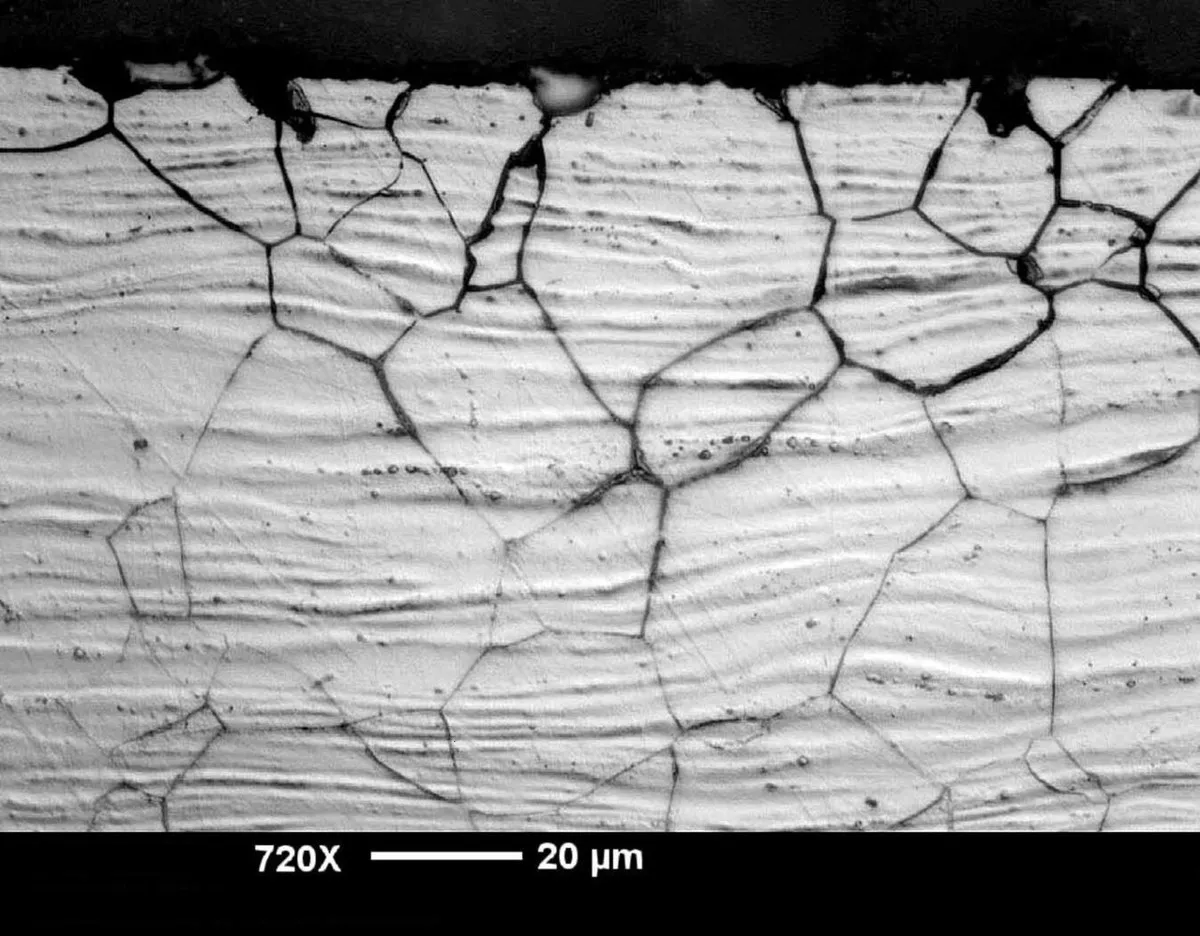
Microscope view of a polished cross section of a material attacked by intergranular corrosion (Cre: Wikipedia)
Distortion and Warping
Stainless steel expands and contracts more than carbon steel when heated. This movement can cause the pipe and fittings to warp, bend, or become misaligned.
Cause: Uneven or excessive heat input during the welding process.
Prevention:
- Secure Your Parts: Use tack welds, clamps, and jigs to hold components like butt weld fittings and stainless steel flanges firmly in place during welding and cooling.
- Balance Your Welds: Alternate your welding sequence from one side to the other to distribute heat evenly.
- Use WIN-VIET Quality: Starting with precision-manufactured stainless steel pipe fittings from WIN-VIET ensures consistent dimensions, making them easier to align and secure.

Severe distortion of a stainless steel expansion joint caused by extreme operating conditions
Porosity
Porosity refers to small gas bubbles or pores trapped within the solidified weld, which weakens the joint.
Cause: Contamination (oil, moisture, dirt) on the welding surface or inadequate shielding gas.
Prevention:
- Guarantee Gas Coverage: Ensure you have the proper shielding gas flow rate and protect the weld area from any drafts.
- Clean Meticulously: All surfaces, including the threaded pipe fittings from WIN-VIET, must be thoroughly cleaned and dried before welding.
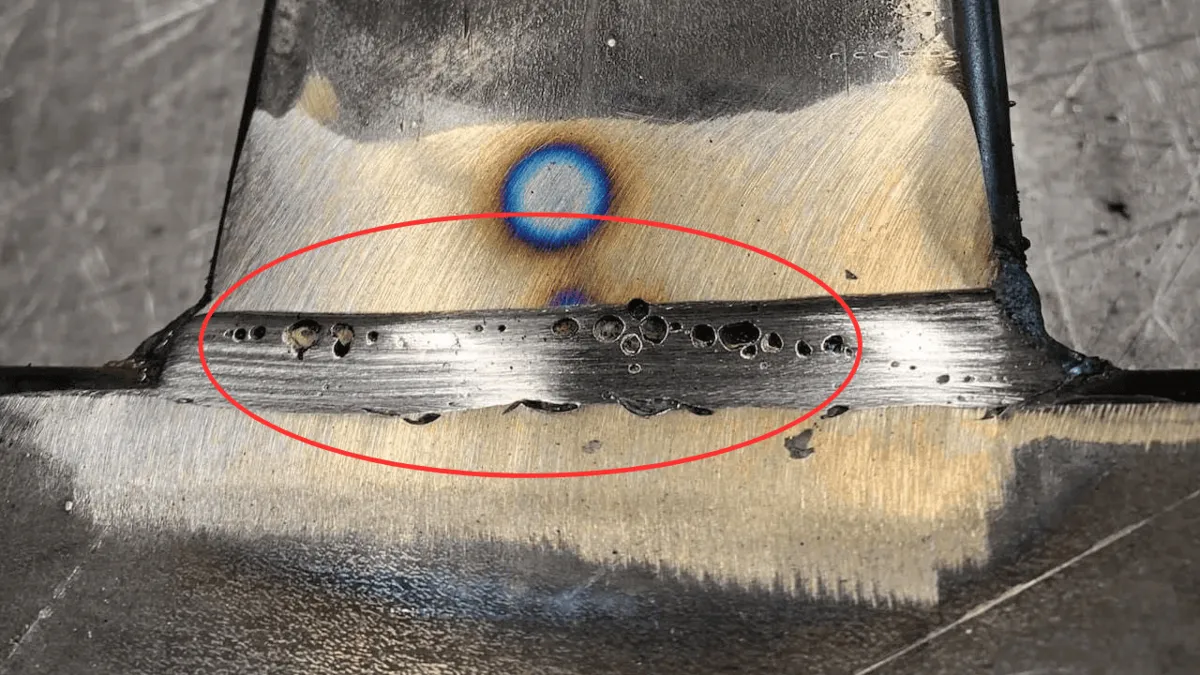
Welding porosity visible as small holes that weaken the joint and compromise durability
Lack of Fusion or Penetration
This occurs when the weld metal doesn't fully fuse to the base metal or fails to penetrate through the entire joint. This creates a critical weak point that can easily lead to failure under pressure or stress.
Cause: Incorrect technique, such as moving too fast, using an amperage that is too low, or holding the electrode at the wrong angle.
Prevention:
- Dial in Your Settings: Use the correct amperage and voltage for the material's thickness.
- Prepare the Joint: Bevel thicker materials to create a groove for the weld. When using components like pipe couplings or a stainless steel elbow from WIN-VIET, ensure the joint gap is clean and consistent.
- Focus on Technique: Maintain a steady speed and direct the arc into the root of the joint to ensure the weld penetrates completely.

Lack of fusion or penetration resulting in weak bonding between weld metal and base material and leading to severe defects
Your Partner for Quality: WIN-VIET
Achieving a flawless weld is a blend of skill, proper technique, and using the best materials available. By understanding and preventing these common issues, you can ensure that every connection is as strong and reliable as the components themselves.
Partner with WIN-VIET for top-tier stainless steel fittings, and apply these best practices to guarantee your projects stand the test of time.
Frequently Asked Questions (FAQ)
Q1: What is the single most important step to prevent welding defects?
A: While all steps are important, thorough cleaning and preparation are the most critical. Any contaminants like oil, grease, paint, or moisture on the pipe or stainless steel fittings can lead to porosity, cracking, and weak welds. Always start with a clean, dry surface.
Q2: How do I choose the right filler metal for my stainless steel welding project?
A: The general rule is to match the filler metal to the base metal. For example, use a 308L filler rod for welding 304L stainless steel, and a 316L filler for 316L stainless steel. For specialized applications or if you're unsure, always consult the technical data sheet or contact your supplier. At WIN-VIET, we can help you select the appropriate materials for your project.
Q3: What should I use to clean stainless steel before welding?
A: Use a dedicated stainless steel cleaner or a solvent like acetone. Crucially, only use tools designated for stainless steel. A wire brush or grinding wheel that has been used on carbon steel will contaminate the stainless steel and can lead to rust and corrosion at the weld site.
Q4: Can I use the same welding techniques for stainless steel as I do for carbon steel?
A: Not exactly. While the principles are similar, stainless steel requires more finesse. It has higher thermal expansion and lower thermal conductivity, so you must use lower heat input, faster travel speeds, and more tack welds to control distortion. This is why understanding the material is key.
Q5: How does using high-quality fittings from WIN-VIET help improve weld quality?
A: Quality fittings make a significant difference. WIN-VIET's stainless steel weld fittings are manufactured with precise dimensional tolerances and consistent metallurgy. This ensures a perfect fit-up for easier alignment, reduces gaps that can cause weld defects, and guarantees the material's chemical properties are certified, minimizing the risk of issues like hot cracking and corrosion.
Have questions about selecting the right stainless steel fittings or need technical advice for your application? The WIN-VIET team is here to help you achieve flawless, durable results.
- Download our product catalogue to see the complete collection of valves and fittings.
- Leave us a message for expert support or a wholesale quote.
- WhatsApp us now for fast, direct assistance.