
In industrial applications, a leak in a high-pressure system isn't just a drip; it's a critical failure. It can trigger catastrophic downtime, lead to significant product loss, and-most importantly-create severe safety hazards for personnel. While pipes and hoses are built to withstand immense force, experience shows that the vast majority of failures occur at a single, vulnerable point: the connection.
Achieving a truly leak-proof system is not a matter of luck. It's the result of deliberate engineering choices. This guide provides a systematic approach to designing and building robust, high-integrity systems by focusing on the three pillars of performance: connection type, material selection, and installation excellence.
1.Why High-Pressure Systems Leak: Understanding the Forces at Play

Before selecting a solution, it's crucial to understand the challenges. High-pressure fittings must contend with more than just static pressure. They must resist a combination of dynamic forces, including:
Vibration & Mechanical Stress: Constant operational vibrations can slowly work connections loose, compromising the seal over time.
Pressure Spikes (Water Hammer): Sudden valve closures or pump startups can create momentary pressure surges far exceeding the system's nominal rating, shocking the connection points.
Thermal Cycling: As temperatures fluctuate, components expand and contract at different rates, placing immense stress on seals and threads.
Incorrect Component Selection: Using a fitting that is not designed for the specific pressures and dynamic forces of the application is the most common-and most preventable-cause of failure.
2.The Cornerstone of Integrity: Selecting the Right Connection Type

The single most important decision you will make is choosing the right fitting technology for the job. Here's a breakdown of the most common options, from most to least secure in high-pressure environments.
2.1 For Permanent, Zero-Leak Applications: Butt Weld & Socket Weld Fittings

When absolute, permanent integrity is non-negotiable, nothing beats a welded connection. By fusing the fitting directly to the pipe, you create a single, continuous piece of metal. This monolithic structure completely eliminates the leak paths found in threaded or mechanical joints.
- Butt Weld Fittings: The pipe and fitting are beveled and welded edge-to-edge, creating a smooth, strong, and uninterrupted flow path.
- Socket Weld Fittings: The pipe is inserted into a recessed area of the fitting before being welded. This is often easier to align and fit up than a butt weld connection.
Best for: Critical process lines, long-term infrastructure, and any system where disassembly is never required. For these applications, stainless steel buttweld fittings are the gold standard.
2.2 For Serviceability & Instrumentation: Compression Fittings

When you need both high-pressure resistance and the ability to service the line, compression fittings are the premier choice. A stainless steel compression fitting uses one or two ferrules (rings) that, when tightened, clamp down and bite into the tubing. This creates an incredibly powerful mechanical seal that can withstand intense pressure and vibration.
Best for: Hydraulic and pneumatic systems, instrumentation lines, control panels, and any connection point that may require periodic maintenance or replacement.
2.3 For Flexible Connections: High-Pressure Hose & Clamps


To connect to moving parts or to dampen system vibration, a flexible hose assembly is necessary. However, the integrity of this connection depends entirely on using the correct high pressure hose clamps. Standard worm-gear clamps are not sufficient. Look for T-bolt clamps or other high-pressure designs that provide 360-degree sealing pressure without damaging the hose.
Best for: Connecting pumps, hydraulic actuators, or bridging two independently vibrating sections of a system.
2.4 When to Use (and When to Avoid) Threaded Fittings
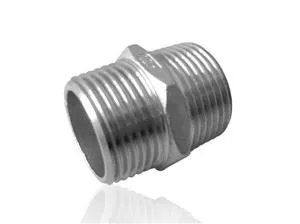
Stainless steel threaded pipe fittings (like NPT or BSPT) are common and convenient, but they are inherently the weakest choice for high-pressure, high-vibration systems. The spiral leak path along the threads is a natural vulnerability. If they must be used, success depends on:
Proper Sealant: A high-quality thread sealant or PTFE tape is mandatory.
Correct Torque: Over-tightening can damage threads, while under-tightening will not create a seal.
Galling Prevention: Stainless steel threads are prone to galling (cold welding). Knowing how to prevent galling in stainless steel threads with proper lubrication and careful assembly is critical.
3. Material Matters: Why 316 Stainless Steel is the High-Pressure Standard

Your fitting type is only half the equation. The material it's made from is just as critical. While 304 stainless steel is excellent for many applications, 316 stainless steel pipe fittings are the superior choice for high-pressure and corrosive environments. The addition of molybdenum gives 316/316L stainless steel significantly enhanced resistance to chlorides, acids, and general corrosion, ensuring long-term material integrity under stress.
4. Sourcing for Reliability: What to Demand from Your Fittings Manufacturer
A high-performance system is built from high-performance components. Your choice of supplier is a direct reflection of your commitment to safety and reliability. When sourcing parts, demand the following from your partner:
Verifiable Quality Control: The manufacturer should conduct rigorous pressure testing and dimensional verification on their products.
Complete Material Traceability: Always request Material Test Reports (MTRs) to certify the chemical composition and mechanical properties of the steel.
Deep Manufacturing Expertise: Look for a partner with proven expertise in both precision casting and CNC machining, as this ensures both material strength and dimensional accuracy.
As a specialized high pressure pipe fittings manufacturer, WIN-VIET was founded on these principles. We enforce stringent WIN-VIET quality standards and provide full traceability to guarantee that every component we ship is ready for your most demanding applications.
5. Conclusion: System Integrity is a Design Choice

A leak-proof, high-pressure system doesn't happen by accident. It is the direct result of informed design choices, meticulous installation, and a commitment to quality at every stage. By selecting the correct connection type for the application, specifying the right materials, and partnering with a manufacturer you can trust, you are not just preventing leaks-you are building a foundation of safety, reliability, and performance.
Have a demanding high-pressure application? Our engineers are ready to help you select the perfect components.
Download our product catalogue to see the complete collection of valves and fittings.
Leave us a message for expert support or a wholesale quote.
WhatsApp us now for fast, direct assistance.